
|
|
||
02/20/09 |
   
|
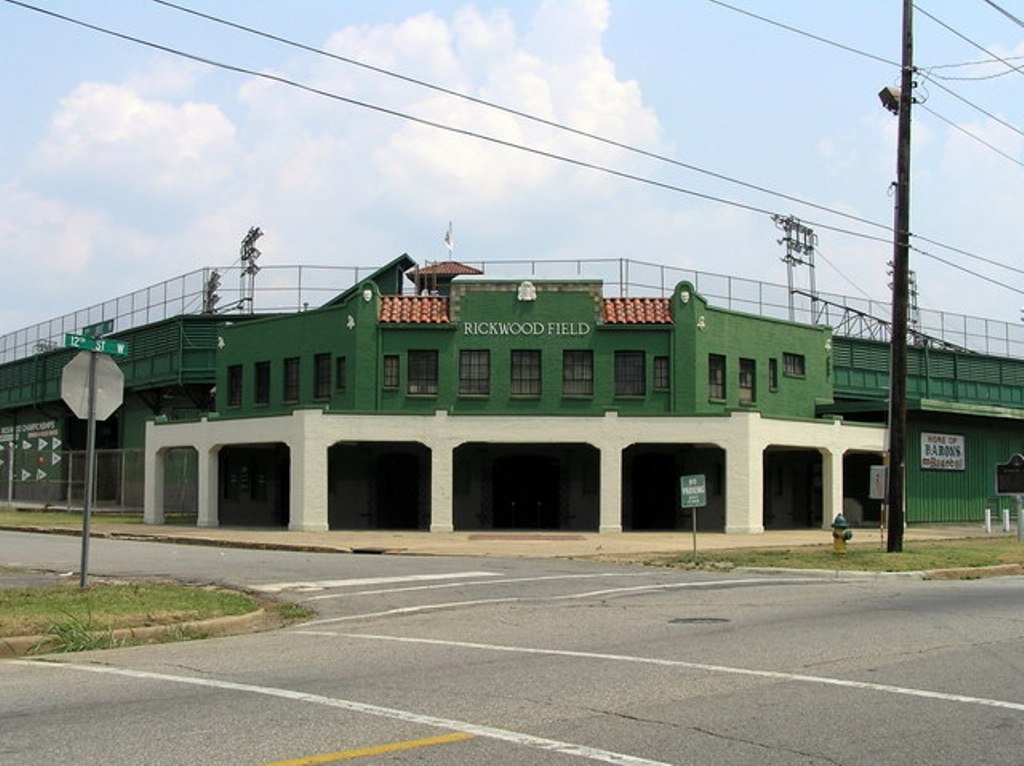
Rickwood Field: A Historic Walking TourText for the below tour is (slightly) adapted from "The Rickwood Self Guided Tour Brochure" available at the park, provided by the Rickwood Field Task Force. Images seen below can be seen in larger form by visiting the Rickwood Field image gallery. Rickwood Field was built by Birmingham Industrialist Rick Woodward and
its opening day was August 18, 1910. In 1993, the National Park Service (HAER)
conducted a summer long research and documentation project confirming that
Rickwood Field is, indeed, the oldest ball park in the nation. Rickwood was
the home playing field for innumerable stars of the Southern Association,
various Negro Leagues and the Southern League between 1910 and 1987, when
the
During its golden era, Rickwood was the site for many exhibition games of barnstorming major league teams - and that's why so many Hall of Famers such as Ty Cobb, Shoeless Joe Jackson, Hank Aaron and Babe Ruth had the opportunity to play here. Despite the departure of the Barons, Rickwood Field is kept very busy in
the present day. The Birmingham Industrial League, the Men's Over Thirty
League, the Men's Over Forty League, the Police Athletic League, the city
high school varsity baseball league, corporate events, occasional college
games and the Annual Rickwood Classic keep Rickwood almost completely booked
during baseball season. The Friends of Rickwood have worked very hard to raise funds to do necessary repairs, maintenance and historic restoration. Current projects underway are new locker rooms for visiting teams (of course, in the vintage style) and a new women's restroom. 1. Main Entranceway - (inside the box offices) This is the way the park has looked since the 1940's. The only remaining original turnstile from the 1910 era is now in the possession of the Birmingham Barons Baseball Club at the Hoover Met.
Once traveling up the ramp and out onto the concourse separat
4. Rickwood Roof - Check out the roof that extends all the way around right field and back along the third base line. The original 1910 drawings show the grandstand roof ending at the dugouts. Please admire the fact that you are looking at a new $300,000 roof that was installed in 1994 - we say "new" because the last roof before this was installed in the 1950's. One of the many Rickwood legends tells of future Big Leaguer Jimmy Piersall being ejected from a Birmingham Baron game in 1955 - and retreating to the roof where he fired a water pistol at the offending umpire.
6. The Original Outfield Fence - Trust us, there is a concrete wall out
beyond the scoreboard and all the outfield signs. When the park was first
constructed, the location of the concrete wall marked the far reach of the
playing f
7. Outfield Signboards - Check out all the antique outfield signs. When
Warner
9. The Field - You are walking out onto the infield laid out by the
immortal Connie Mack of Philadelphia fame. In 1909, founder Rick Woodward
sought advice from Cornelius MacGillicudy, the man who built Shibe Park and
ran the Philadelphia baseball club. Mr. Woodward prevailed upon his friend
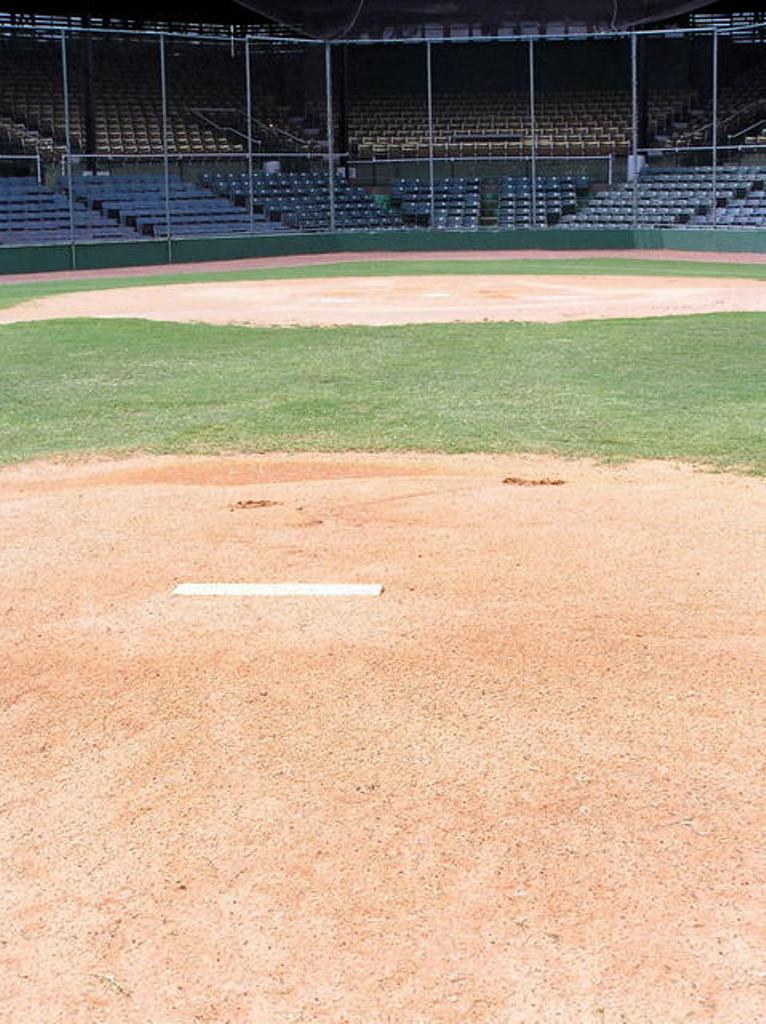
to come to Birmingham to help lay out the dimensions of Rickwood Field. 10. Rickwood's Pitcher's Mound - From this mound, the greatest names in
baseball have performed: Christy Mathewson, Grover Cleveland Alexander,
Satchel Paige, Burleigh Grimes, Rollie Fingers and of course, Dizzy Dean and
Ray Caldwell. In what is generally considered the most epic game ever played
at Rickwood Field, an aging alcoholic - former Major Leaguer named Ray
Caldwell outdueled Dizzy Dean in 1931 to win the Dixie Series championship
for Birmingham over the Houston Buffaloes. Take a look at the wooden louvers
circling the stands below the roof line. These were recently re-installed to
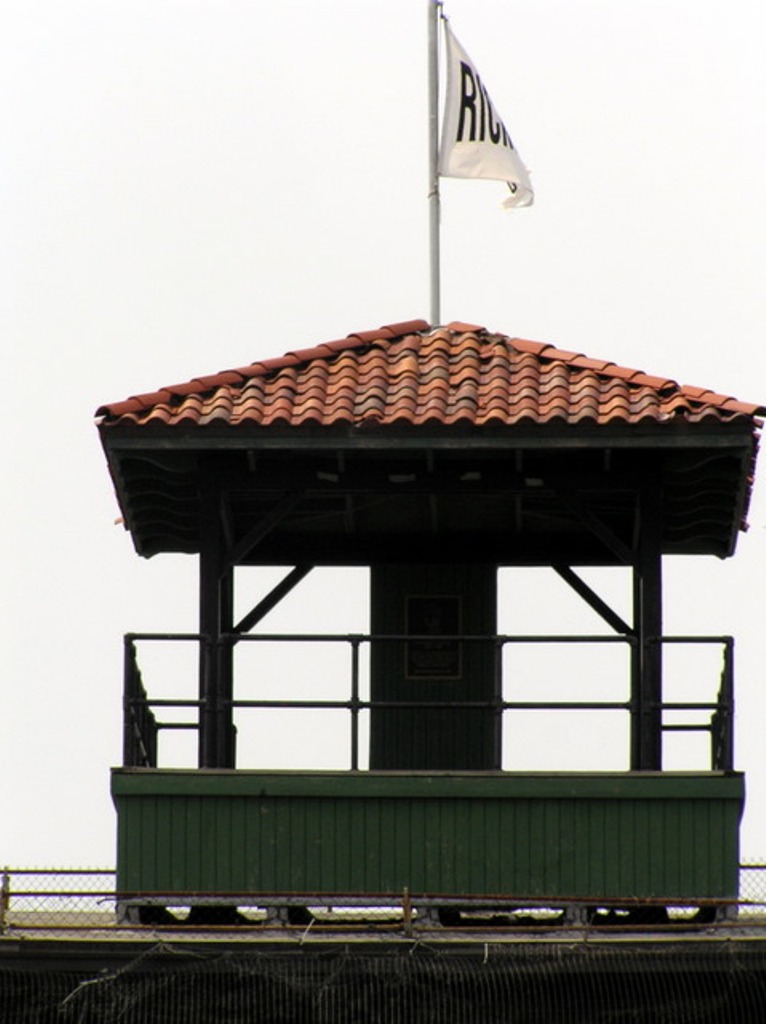
block the sun from fielders' eyes - just as in the o 11. The Gazebo Pressbox - You are looking at the Fullerton Gazebo, an
exact replica of the original 1910 press box that adorned Rickwood Field
from the very beginning. This replica was built in 1998 as a tribute to the
Friends of Rickwood Field's first executive director, Chris
12. The Four Light Towers Atop the Roof - Obviously, one of the most
distinctive architectural elements of Rickwood Field, contributing hugely to
the park's antique feel. All four light towers were erected in 1936, making
Rickwood one of the first minor league ballparks to host night games. These
75 foot high cantilevered structures represent state of the art technology
for the 1930's. 13. Box Seats Halfway down the First Base Line - This is the spot of
perhaps one of the most romantic events that ever happened at Rickwood.
During the 1950 season, Baron first baseman Norm Zauchin chased a foul ball
over to the wall so hard that his momentum tumbled him into the lap of a
young lady sitting in the
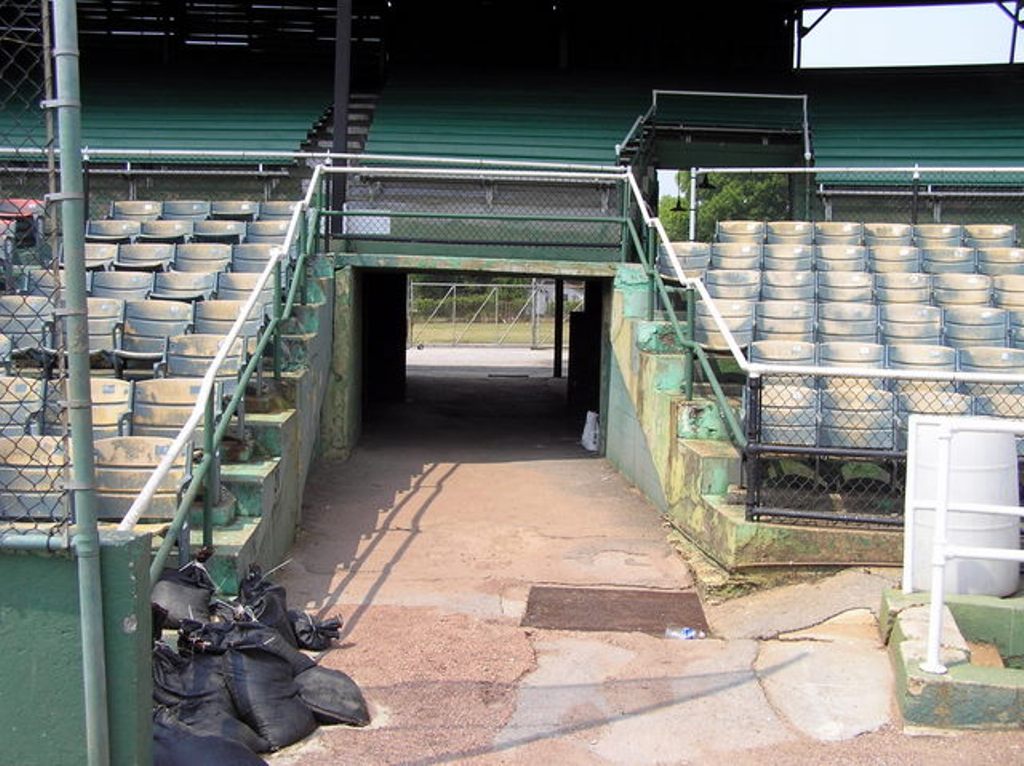
14. The Tunnel Beneath the Stands - In 1912, Barons owner Rick Woodward was ejected from a game for engaging in fisticuffs in this tunnel with legendary umpire Bulldog Williams. So, do you still think George Steinbrenner is meddlesome? |
This site was last updated 02/20/09
 Birmingham
Barons left for the suburban Hoover Metropolitan Stadium
Birmingham
Barons left for the suburban Hoover Metropolitan Stadium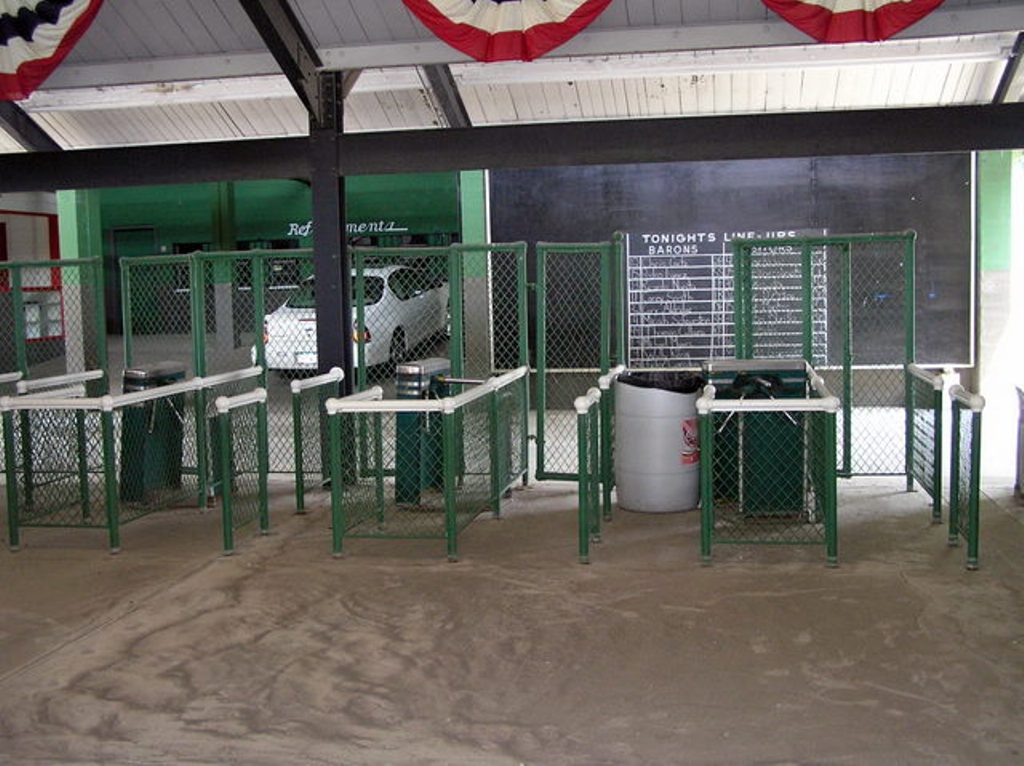
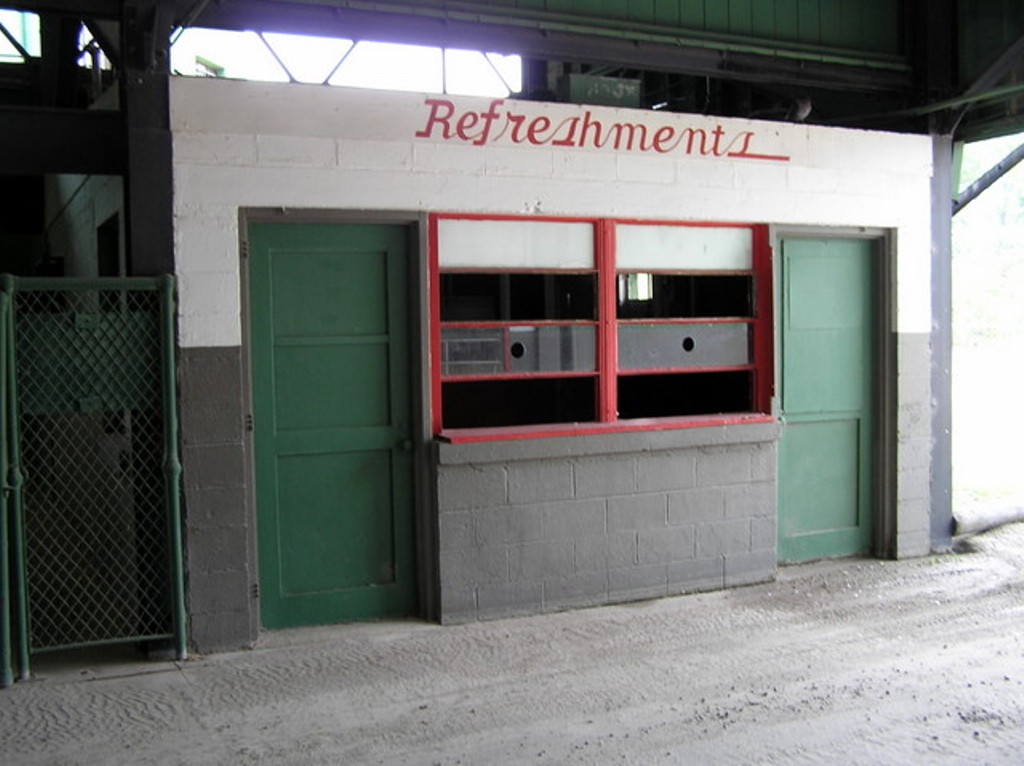 2.
Breezeway photographs - For decades, Birmingham Baron favorites were
featured on this wall which, as you can see [in the image gallery], is not
totally weather proof. The Friends of Rickwood have added Black Baron greats
which included Birmingham native Willie Mays, future Hall of Famer. This is
the main concession area at Rickwood Field, built when the park only held
3,000 people. You'll notice the low level of the windows - this was due to
the diminutive size of the man that ran this concession for many years.
2.
Breezeway photographs - For decades, Birmingham Baron favorites were
featured on this wall which, as you can see [in the image gallery], is not
totally weather proof. The Friends of Rickwood have added Black Baron greats
which included Birmingham native Willie Mays, future Hall of Famer. This is
the main concession area at Rickwood Field, built when the park only held
3,000 people. You'll notice the low level of the windows - this was due to
the diminutive size of the man that ran this concession for many years. ing
the box seats from the grandstand, you can see the covered right field
bleachers that wrap quirkily out and around right field. Rickwood Field took
Pittsburgh's former Forbes Field as its big league model, and the similarity
is striking. Probably the most distinctive change here in the grandstand
since its "golden age" in the 40's and 50's is the absence of overhead
window fans and the wooden box seats and wooden row seats that had been
moved here from the former Polo Grounds, home of the New York Giants. (Old
timers can still recall the "NY" emblems in wrought iron at the end of the
grandstand rows. These seats finally rotted away and were removed in the
early 70's and were available for purchase for many years under the south
grandstand at Legion Field.)
ing
the box seats from the grandstand, you can see the covered right field
bleachers that wrap quirkily out and around right field. Rickwood Field took
Pittsburgh's former Forbes Field as its big league model, and the similarity
is striking. Probably the most distinctive change here in the grandstand
since its "golden age" in the 40's and 50's is the absence of overhead
window fans and the wooden box seats and wooden row seats that had been
moved here from the former Polo Grounds, home of the New York Giants. (Old
timers can still recall the "NY" emblems in wrought iron at the end of the
grandstand rows. These seats finally rotted away and were removed in the
early 70's and were available for purchase for many years under the south
grandstand at Legion Field.)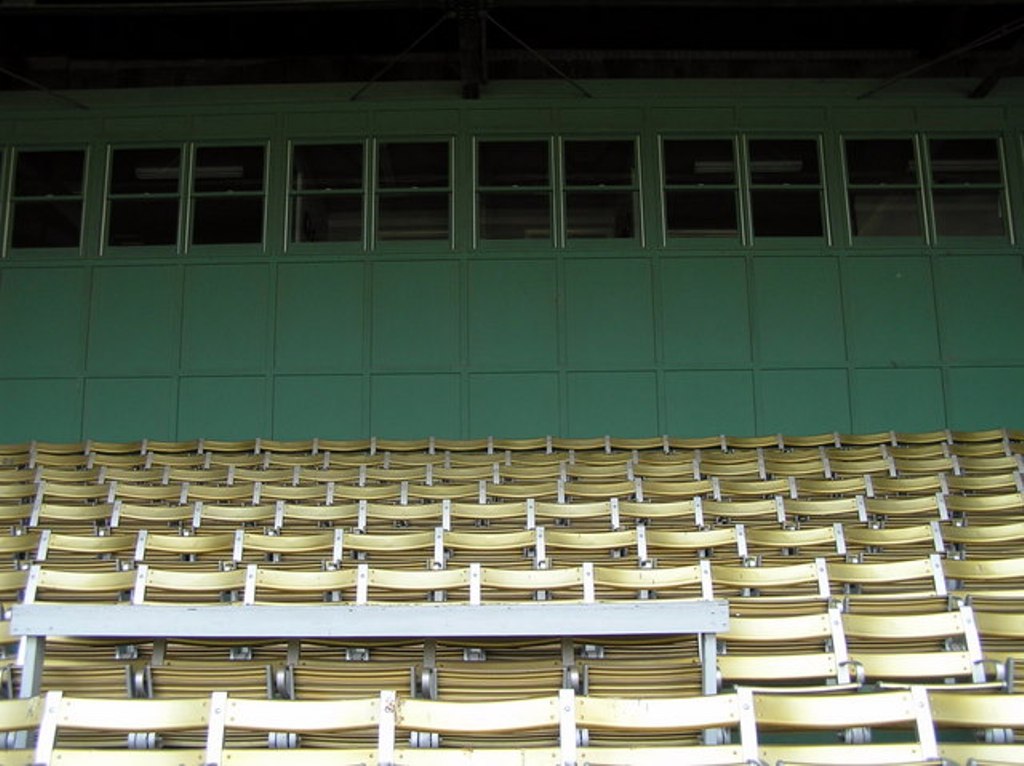 3.
Rickwood Pressbox - Rickwood old timers will tell you that the original
Pressbox held a maximum of four people and was always on the roof - and they
are correct. However, when HBO filmed "Soul of the Game" here in 1995
(starring Delroy Lindo, Mykul T. Williams and Blair Underwood) they
recreated Washington D.C.'s Griffith Stadium which featured a vintage
pressbox exactly like this. At the same time, the Friends of Rickwood had
just learned that to rebuild a fully functional pressbox on the roof - with
full modern conveniences - would cost an extra $75,000 in additional
structural roof support. The Friends therefore decided to recreate the
Griffith Stadium pressbox.
3.
Rickwood Pressbox - Rickwood old timers will tell you that the original
Pressbox held a maximum of four people and was always on the roof - and they
are correct. However, when HBO filmed "Soul of the Game" here in 1995
(starring Delroy Lindo, Mykul T. Williams and Blair Underwood) they
recreated Washington D.C.'s Griffith Stadium which featured a vintage
pressbox exactly like this. At the same time, the Friends of Rickwood had
just learned that to rebuild a fully functional pressbox on the roof - with
full modern conveniences - would cost an extra $75,000 in additional
structural roof support. The Friends therefore decided to recreate the
Griffith Stadium pressbox.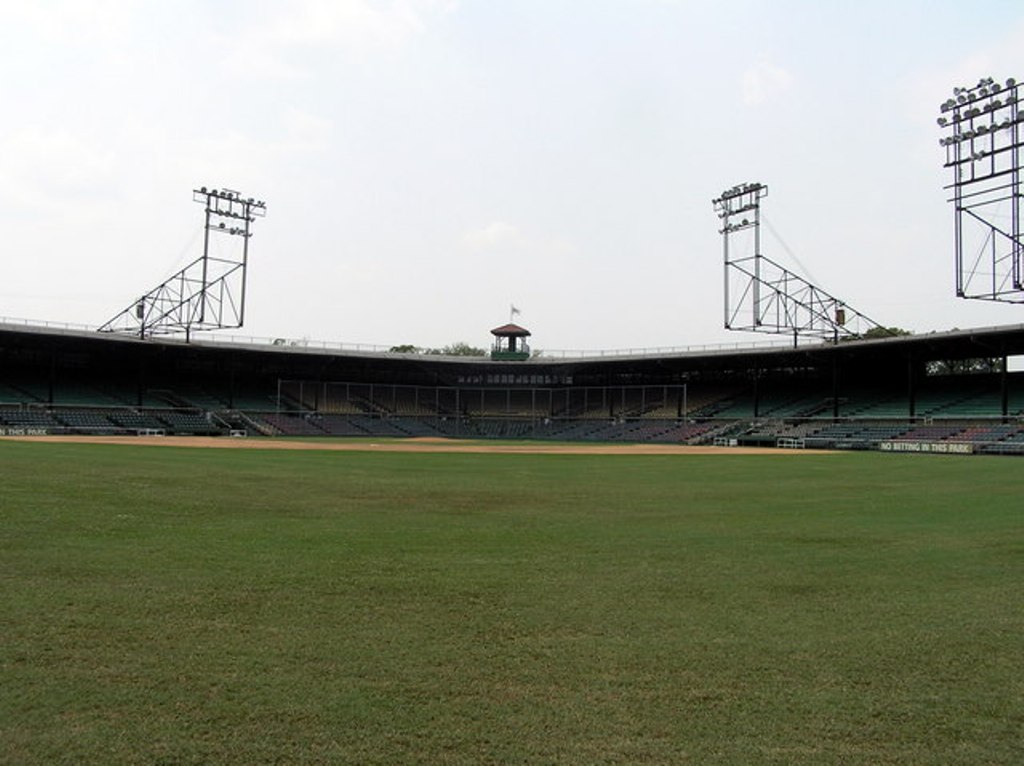
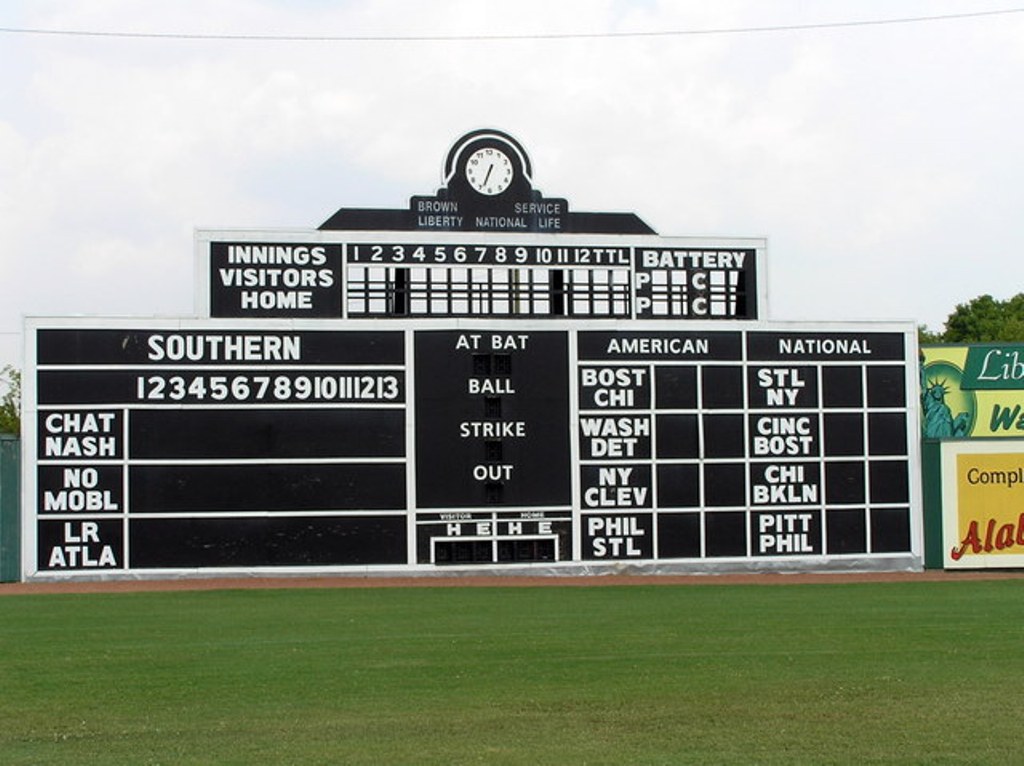 5.
Drop-In Scoreboard - When the Friends of Rickwood were organized in 1993,
one of the very first objectives was to replace the existing modernistic and
aesthetically inappropriate 1970's-era electric scoreboard with the 1948-era
classic scoreboard you see today. The leadership in charge of the park at
that time was horrified at the prospect of taking down one of the few things
that still worked, but once the vintage scoreboard replaced it, it was like
blinders being removed. Suddenly, Rickwood began to reachieve its magic all
over again. Visitors who remember the heated competition between Birmingham
and Atlanta in the old Southern Association will notice the proper placement
of the Atlanta Crackers on the scoreboard.
5.
Drop-In Scoreboard - When the Friends of Rickwood were organized in 1993,
one of the very first objectives was to replace the existing modernistic and
aesthetically inappropriate 1970's-era electric scoreboard with the 1948-era
classic scoreboard you see today. The leadership in charge of the park at
that time was horrified at the prospect of taking down one of the few things
that still worked, but once the vintage scoreboard replaced it, it was like
blinders being removed. Suddenly, Rickwood began to reachieve its magic all
over again. Visitors who remember the heated competition between Birmingham
and Atlanta in the old Southern Association will notice the proper placement
of the Atlanta Crackers on the scoreboard.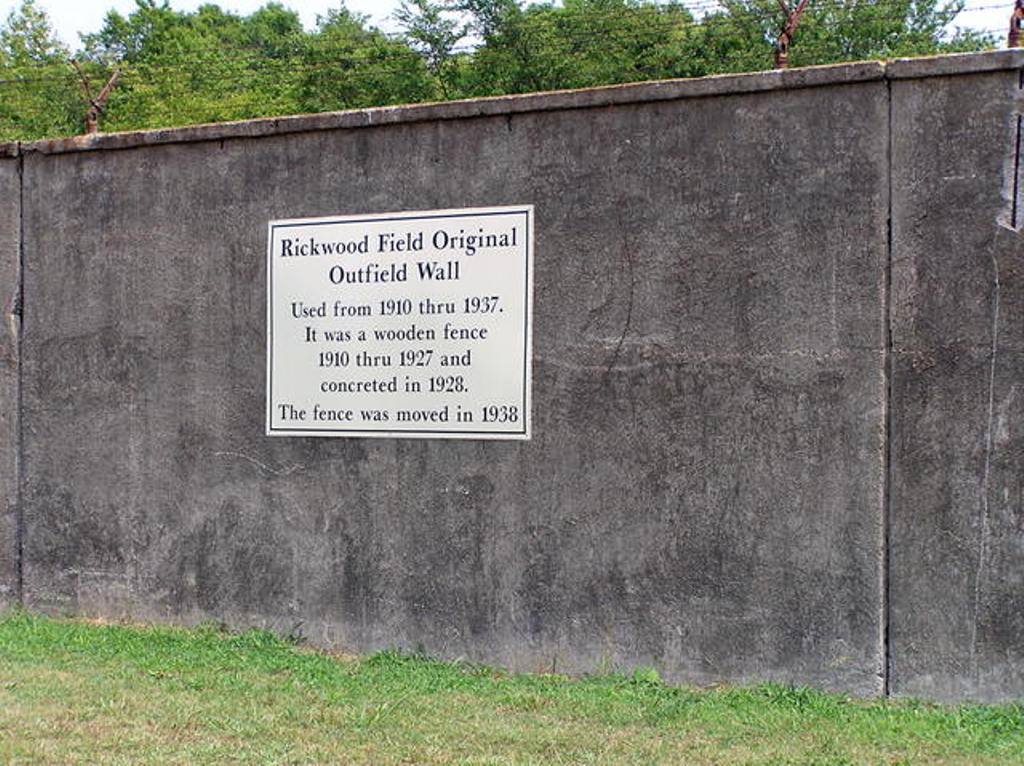 ield
- a full 470' to left field. The first fence was wooden, then i
ield
- a full 470' to left field. The first fence was wooden, then i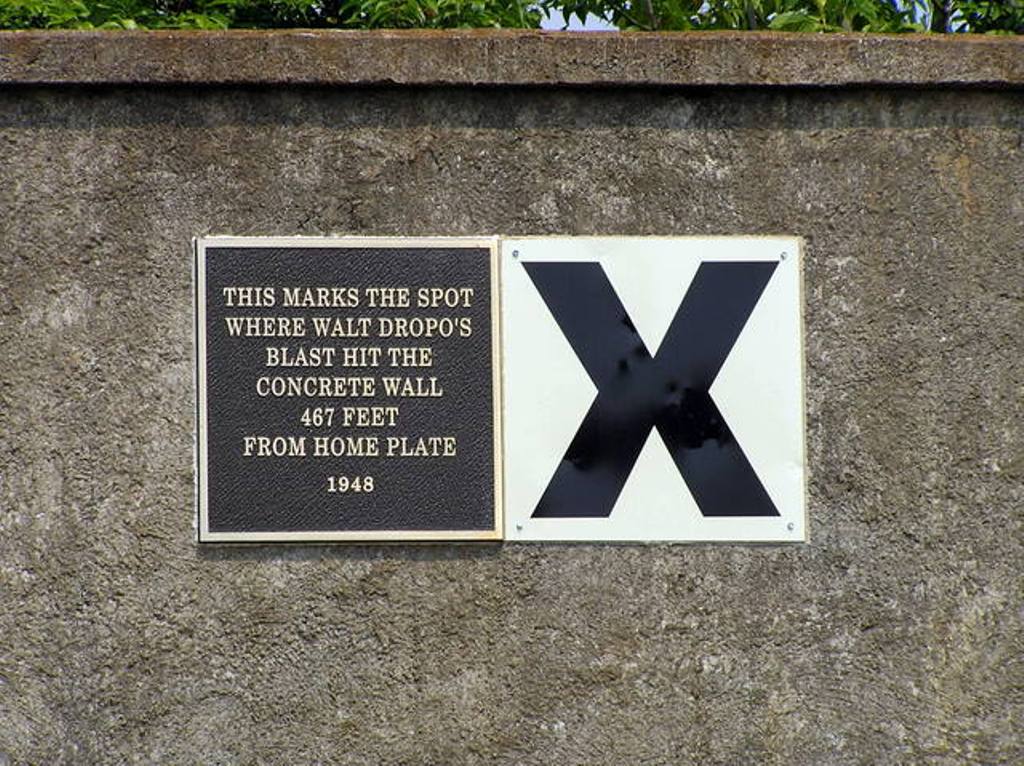 n
1928 it was replaced with the concrete wall that now stands. Only problem
was, it was too far away for anyone to hit a homerun over it. Therefore,
management yielded to marketing realities and built the wooden fence that
you see now much closer in. Many oldtimers say the longest homerun ever hit
at Rickwood was in 1948 when Walt Dropo's mighty blast cleared the wooden
scoreboard and struck the concrete wall halfway up. If you walk out behind
the scoreboard to inspect it, you can still see the X marking the spot on
the wall to this day.
n
1928 it was replaced with the concrete wall that now stands. Only problem
was, it was too far away for anyone to hit a homerun over it. Therefore,
management yielded to marketing realities and built the wooden fence that
you see now much closer in. Many oldtimers say the longest homerun ever hit
at Rickwood was in 1948 when Walt Dropo's mighty blast cleared the wooden
scoreboard and struck the concrete wall halfway up. If you walk out behind
the scoreboard to inspect it, you can still see the X marking the spot on
the wall to this day.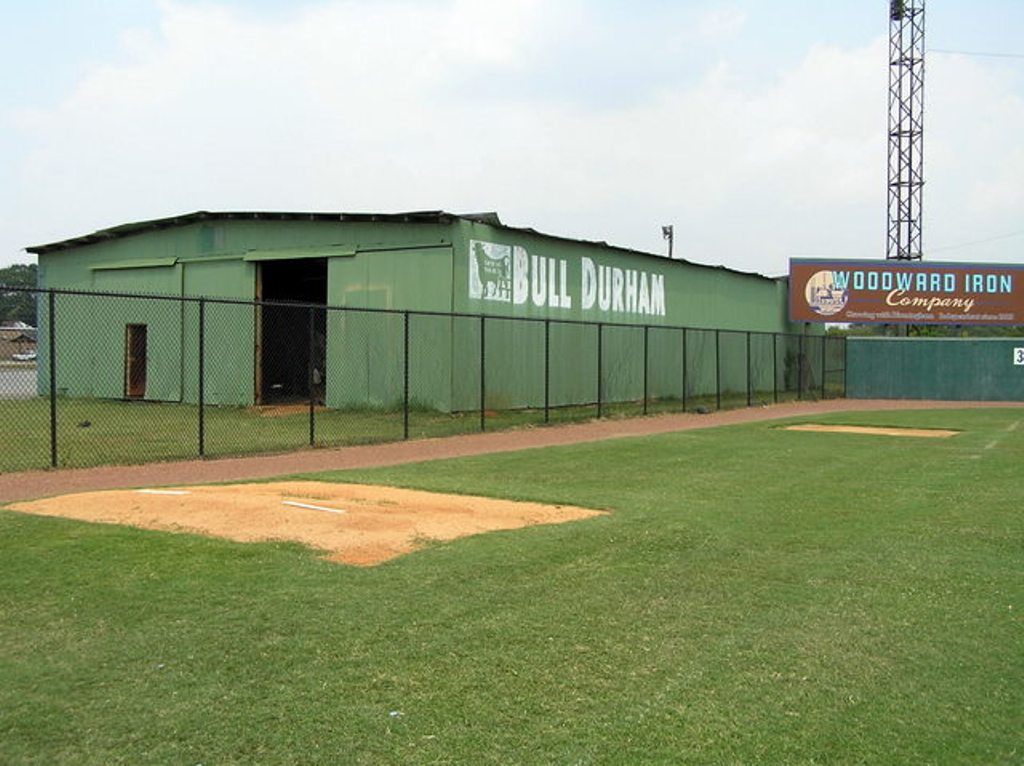 What
happened to the left field bleachers? Due to dwindling crowds in the
post-television age as well as mounting maintenance problems, the rambling
wood left field bleachers were removed sometime in the 1970's. In their
place now stands the UAB "Harry the Hat" Batting Building with the Bull
Durham sign on its side. Also gone are "Glennon Gardens," the overflow
seating area in front of the current left field wall and named for the
popular Birmingham Barons skipper of the championship season of 1958.
Rickwood's master plan does call for the rebuilding of the left field
bleachers.
What
happened to the left field bleachers? Due to dwindling crowds in the
post-television age as well as mounting maintenance problems, the rambling
wood left field bleachers were removed sometime in the 1970's. In their
place now stands the UAB "Harry the Hat" Batting Building with the Bull
Durham sign on its side. Also gone are "Glennon Gardens," the overflow
seating area in front of the current left field wall and named for the
popular Birmingham Barons skipper of the championship season of 1958.
Rickwood's master plan does call for the rebuilding of the left field
bleachers. Bros. filmed the movie "Cobb" here in 1994 starring Tommy Lee Jones, they
set their artisans to work designing period outfield signs to replicate
major league ballparks of the twenties. Hence, the "Budweiser on Draught in
Philly" sign. The Friends of Rickwood have spent $65,000 in making these
movie props weather resistant and a permanent feature of the park. The
"Reddy Kilowatt" billboard promoting Alabama Power Company is the most
recently completed sign. Other long-term Birmingham businesses are currently
being urged to have their advertising message done in the vintage style to
add to the overall Rickwood experience.
Bros. filmed the movie "Cobb" here in 1994 starring Tommy Lee Jones, they
set their artisans to work designing period outfield signs to replicate
major league ballparks of the twenties. Hence, the "Budweiser on Draught in
Philly" sign. The Friends of Rickwood have spent $65,000 in making these
movie props weather resistant and a permanent feature of the park. The
"Reddy Kilowatt" billboard promoting Alabama Power Company is the most
recently completed sign. Other long-term Birmingham businesses are currently
being urged to have their advertising message done in the vintage style to
add to the overall Rickwood experience.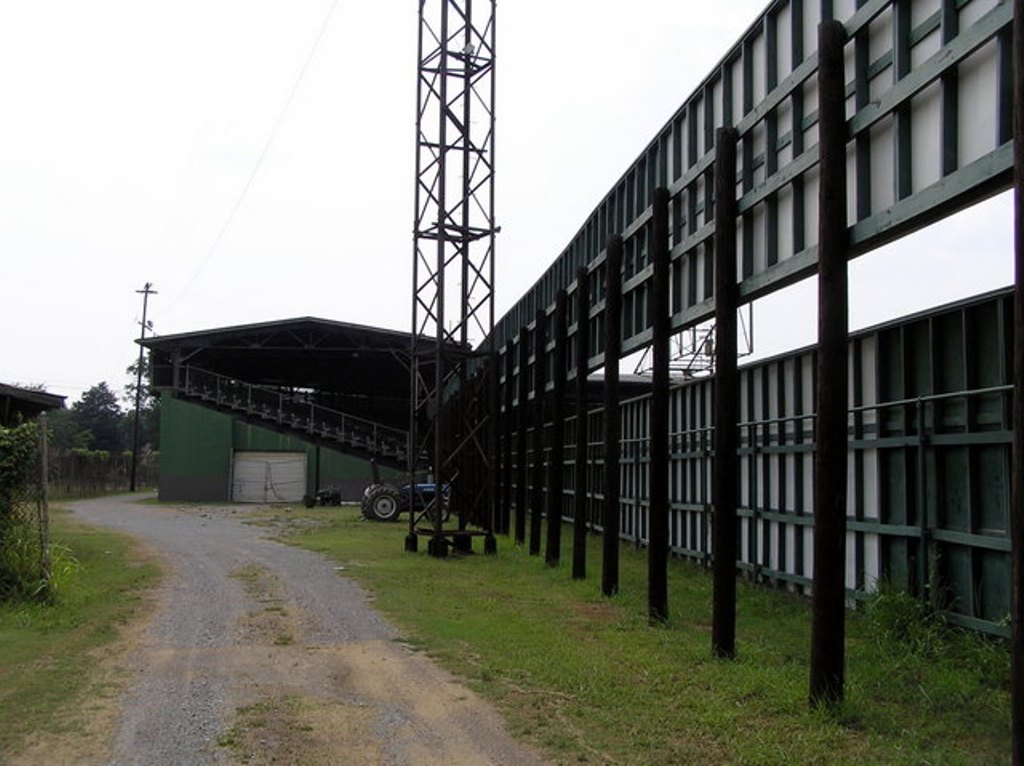 8.
The Arrow Shirt Sign - It's gone now, but one of Birmingham's most prominent
examples of Jim Crowism were the "Negro bleachers" that once stood directly
behind this sign board. Whenever the Birmingham Barons played in this park
before 1963, if an African-American wanted to see the game, he or she would
have to sit out in the blazing sun beyond the right field wall. However, the
Negro American League also played here and, due to the number of future Hall
of Famers they brought here (Jackie Robinson, Josh Gibson, Satchel Paige,
Willie Mays, et. al.), one would have to conclude they had far superior
teams. And, in a small measure of justice, white fans who wanted to see the
Black Barons play would sit in the "Negro bleachers" during the Negro League
games played here.
8.
The Arrow Shirt Sign - It's gone now, but one of Birmingham's most prominent
examples of Jim Crowism were the "Negro bleachers" that once stood directly
behind this sign board. Whenever the Birmingham Barons played in this park
before 1963, if an African-American wanted to see the game, he or she would
have to sit out in the blazing sun beyond the right field wall. However, the
Negro American League also played here and, due to the number of future Hall
of Famers they brought here (Jackie Robinson, Josh Gibson, Satchel Paige,
Willie Mays, et. al.), one would have to conclude they had far superior
teams. And, in a small measure of justice, white fans who wanted to see the
Black Barons play would sit in the "Negro bleachers" during the Negro League
games played here.
 ld
days.
ld
days.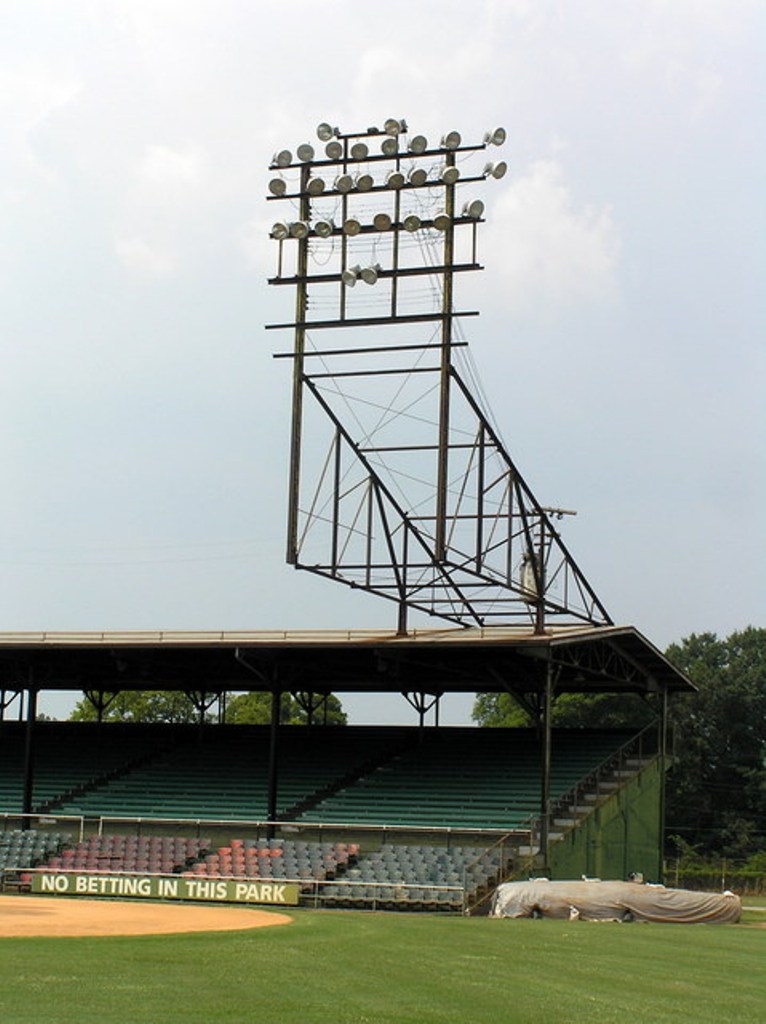 Fullerton
of Richmond, Virginia. Prior to his untimely death, Chris often remarked
that without this pressbox, Rickwood "appeared to be a church without a
steeple."
Fullerton
of Richmond, Virginia. Prior to his untimely death, Chris often remarked
that without this pressbox, Rickwood "appeared to be a church without a
steeple."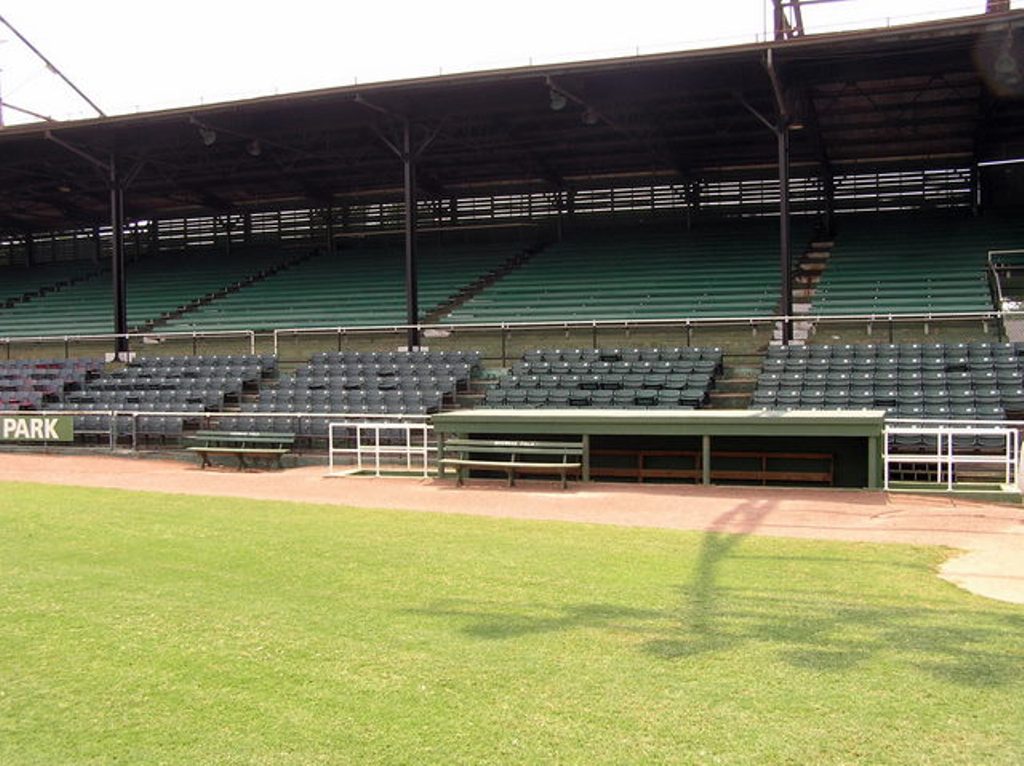
 first
row of the box seats. Later, he got the usher to introduce them and the pair
were married two years later.
first
row of the box seats. Later, he got the usher to introduce them and the pair
were married two years later.